
| THE CONTEMPLATIVE ORDERS (Anthony. Bruno Teresa) | THE SERVICE ORDERS (Dominic, Ignatius, Augustine) |
|
|
| FORM: The contemplative orders did not originate written formal rules though later ones modified existing rules.
CONTENT: The content of the unwritten formal rule always stressed the need for freedom through Individual discipline as the key to the contemplative life through the primary manifestations of radical silence and constant prayer.
FUNCTION: The function of the adaptation of other rules was to enable contemplation, meditation, and prayer for the order which allowed each member Individual contemplation, this then became a structured symbolic activity which always held the Individual up against his decision to provide the contemplative style of their times. SYMBOLIC PRIMARY ACTIVITY: They engaged in the primary symbolic activity of constant solitary prayer.
OBJECTS: They stand present to and participated in secondary symbols of austere selfdenial or poverty; of radical spatial confinement; and of total silence.
FUNCTION: The function of their symbolic life was to replace their external sensory environment with a new interior context for the spirit Journey. SECONDARY EMPHASES TEACHING: although formal teaching was in no way a primary objective whatever teaching they performed was done Indirectly through their style or presence and the spiritual training. It enabled for the order disciples as well as the new vision. It provided for society. SERVICE: Service, too, was a personal concern and consisted in offering an alternate life style to come over against the world's understanding of humanness. FUNCTION: These contemplative orders saw contemplation as being the very basis of their being in existence. | FORM: The rules of the service orders were all written, three of which were written by the founders of the Orders.
CONTENT: The content was always related to the mission service of the order, allowing time and goods to be ordered for the external task.
FUNCTION: The function was to create and maintain a corporate body. SYMBOLIC
PRIMARY ACTIYITY: All of these orders had a symbol office. OBJECTS: symbolic objects were either external signs of their serving role or ennoblement for the community e.g. beggar robes for the Franciscan and Inconspicuous clothing for the others; common property; intentional meals.
FUNCTION: The function of the symbolic life was to demand an Internal asceticism by enabling corporate solidarity in face of the task. SECONDARY EMPHASES SERVICE: What holds all these orders together is their emphasis upon the community as an Instrument for executing the external missional task of serving the church and, thereby, the world.
TEACHING: The secondary task was evangelistic, teaching. CONTEMPLATION: Contemp1ation, was a focus of order life was subservient both to the corporate life style and the external missional thrust. |
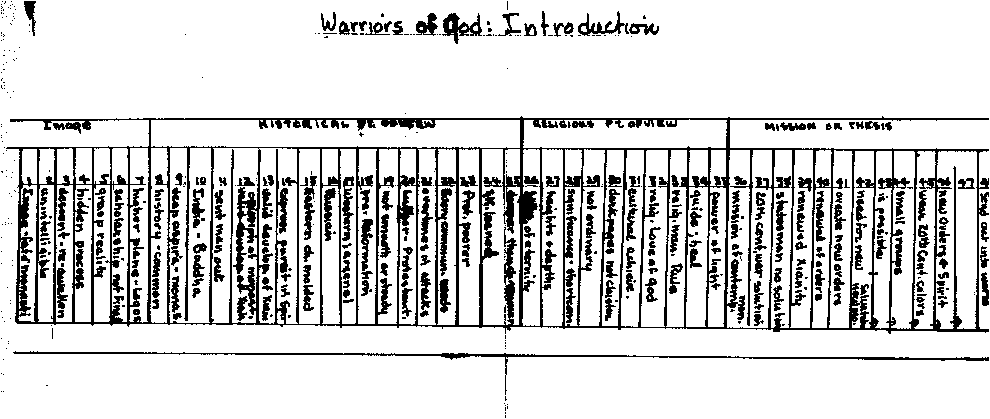
Chart of Introduction to Nigg's book
 |