 CSIII a SESSION 2: RESEARCH CENTRUM:
CSIII a SESSION 2: RESEARCH CENTRUM:
~_4~. INDIVIDUAL POLITICAL WORKSHOP QUARTER II, 197374
AND FAMILY

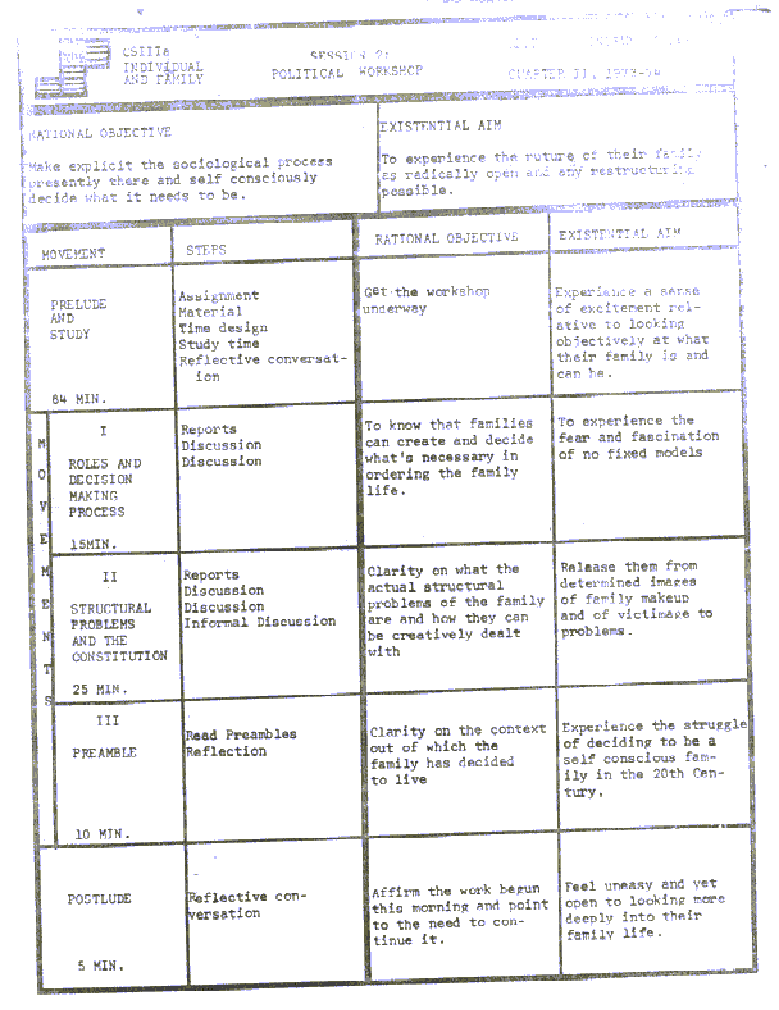
MOVEMENT I ROLES AND DECISION MAKING,


PROCEDURES

REPORTS
DISCUSSION
10 MIN.
ROLE DISCUSSION
S MTN.
HAVE FOUR PEOPLE PUT ROLE LISTS UP ON BOARD
(INCLUDE ONE h~SBAND AND WIEE TEAM)
WHILE LISTS ARE BEING PUT ON BOARD TALK ABOUT DECISION
MAKIN; PROCESS. KEEP MOOD LIGHT
1. How do you make decisions ?
2. Where do you encounter prohlems ?
3. Where do you think. you might experiment with new forms ?
LOOK THROUGH EACH SET
1. What are some roles vou had down that are not listed ?
2. What wes your rationale for that kind of role assignment ?
3. Where do you see new roles emerginF~ ?
S/C There are no fixed roles

MOVEMENT II CONSTITUT ~

REPORTS
ORAL DISCUSSION
10 MIN.
THREE PEOPLE PUT CONSTITUTION LISTS ON BLACKBOARD OR BUTCHER PAPER
WHILE OTHERS ARE WRITING CONSTITUTIONS ASSIGN THREE PEOPLE TO SCRIBE PROBLEMS AND THEN PULL ASIDE AND GESTALT TO 5
Are they structural problems?
DISCUSSION
15 MIN.
REVIEW FACH SET OF CONSTITUTION LISTS
1. Where are similiarities? PULL TOGETHER
2. What's missing ?
3. Did we include some kind of amTnendment process ?
GESTALT THE TOTAL LIST INTO A 10 POINT CONSTITUTION
REVIEW PROBLEMS GESTALT
1. Would these problems be dealt with in the constitution ?
2. What else would need to he added ?

INFORMAL
DISCUSSION
5 MIN. ~
1. How would you he~ in to plan a "Constitution Wrifing Weekend" ?
2. What preliminary activities might vou set up to engage the whole family in such a weekend ?
3. What would the agenda look like ?
3~:LC
 ~
~ ~CS IIIA
~
~ ~CS IIIA
t|~' INDIVIDUAL
AND FAMILY
RESEARCH CENTRUM: CHICAGO QUARTER II, 19731974

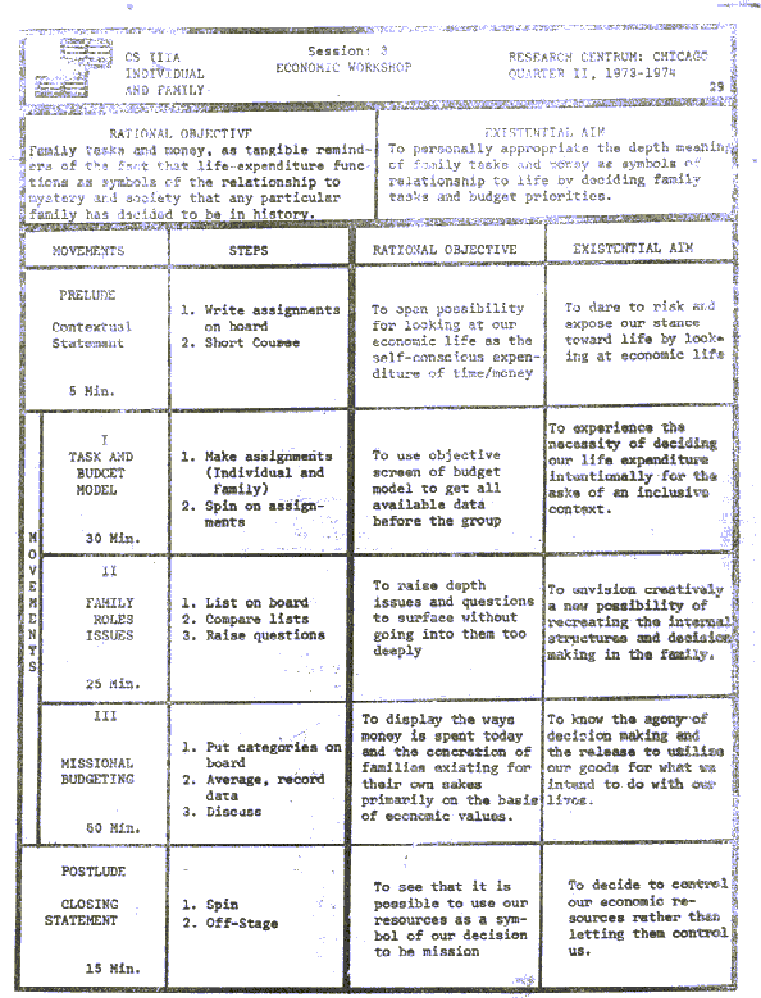
MOVEMENT III: MISSIONAL BUDGETING
60 Hin.

PUT CATEGORIES ON BOARD
AVERAGE AND RECORD DATA
DISCUSS
60 Min.
PROCEDURE S
PEDAGOGUE PUTS CATEGORIES ON BOARD. CALL FOR %'S FROM 5 PEOPLE FOR ALL THE CATEGORIES. YOU NEED TO GET RESPONSES FROM SINGLE, MARRIED, COUPLES W/ 2 OR LESS CHILDREN, 3 OR MORI
AVERAGE AND RECORD DATA IN COLUMN TO RIGHT OF CATEGORIES.
1. khat do these figures show us about the way we, as a group and as individuals spend our money?
2. How do your percentages compare with the group's?
3. If you had to reduce your housing, food and utilities by half, how would you do it?
4. Rhat is the most crucial area in which your fa*Sly experiences economic tyranny?
5. When you pay your bills, which checks do you w~ite first?
6. What do you spend your leftover money on?
7. If you were to decide to symbolize your decision to reorder your economic life for mission, what would be a radical sign?

8. What is the first thing you would do to begin making this sign?
POSTLUDE

15 Hin.
SPIN
OFFSTAGE
15 Min.
What would it mean, for sake of the future, to invent anew the stance toward stewardship in relationship to our time and material resources?
"It is clear that we can look rationally at how we use money and that we can decide to control our economic resources rather than letting them control us."

lr lE~!!. CS IIIA Session: 4
~ INDIVIDUAL WORKSHOP: FAMILY SYMBOLS
i! ~ ~ AND FAMILY
RESEARCH CENTRUM: CHICAGO QUARTER II, 19731974
3

15 minutes
I N T R O D U C T I O N


Singing
5th City songs, rituals
Lead group in doing
PROCEDURES

Lead group in singing a spirited secular song. informality
(Mood note: Saturday evening is change of pace: with directior
Spin on 5th City Preschool rituals, such as: "This is the day we have, This is the day we have. We can live this day Or throw it away, This is the day we have. So, let's
(hands extended)
(hands up)
(hands down)
(hands extended)
PICK UP this day and LIVE!" (hands up)
or:
"This is the drum of the city, (beat on
This is the drum of the city, table)
It says to us that we can live;
Let's be the drum of the city."
a 5th City song and ritual, such as:
(tune: Old MacDonald Had a Farm)
'.' I am always falling down, (lean over)
But I know what I can do:
I can pick myself up (pick self up)
and say to myself,
'I'm the greatest, too.'
It doesn't matter if I'm
big or small,
I live now if I live at all.
I am always falling down,
But I know what I can do."
or:
L: The future is open.
C: We can decide.
L: That's the way it is.
C: Be it so!

(point to sell
(hold hand at tall ~ short heights) (fall, down, pick self up)
_ .
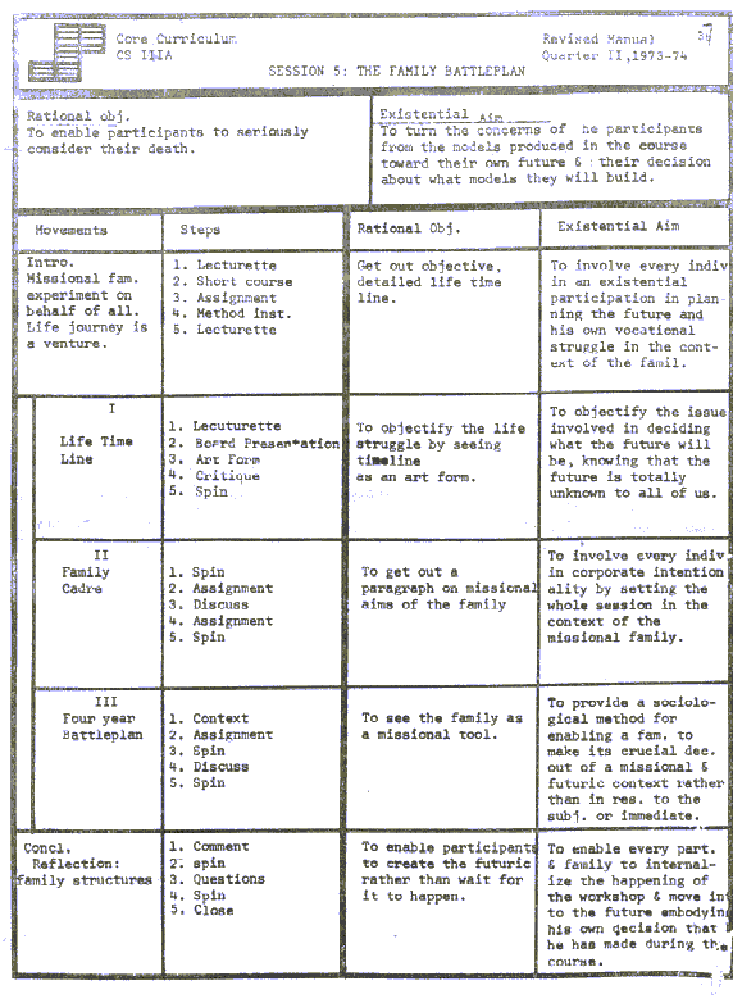
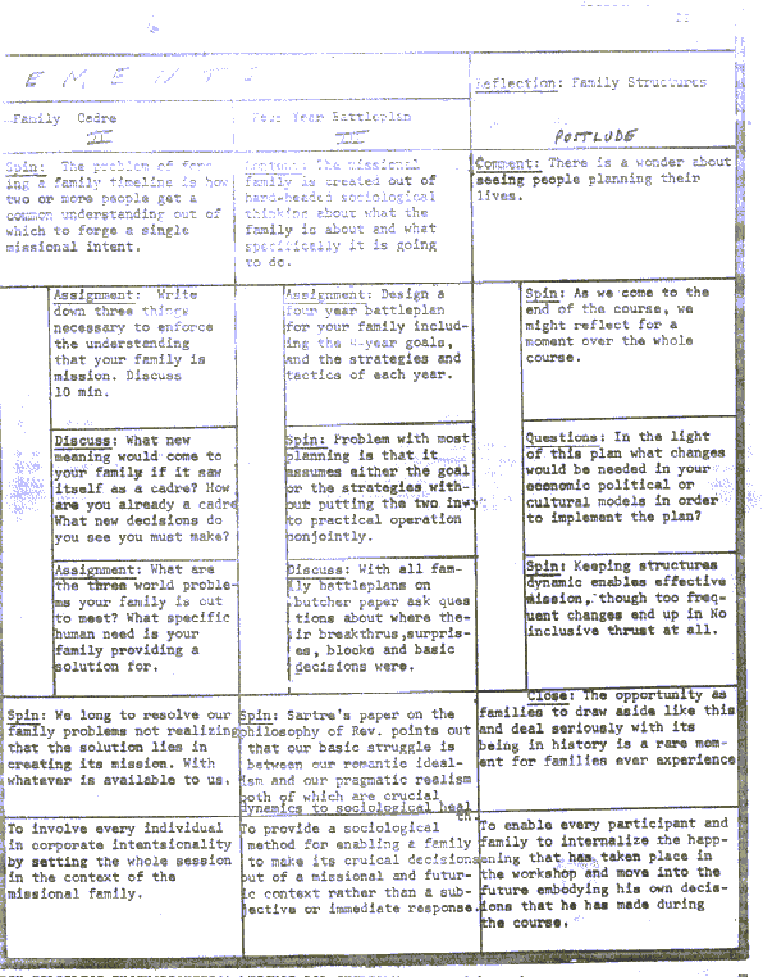
Lecturette: The symbol systems of any individual or group are
~ identical with the conscious and unconscious universe they liv. out of; and therefore the symbols determine who they will be in history.
Discuss: Wbat are some obvious syabols that communities and familios tiu know live by? What issues arise because of conflictin~ or unrolatid symbol systems?

~ CS IIIA ~
[~l INDIVIDUAL
lD FAMILY
8_
Session: 4
n'O?~KSnOF: ~ Au ~ LY SYMBOLS
RESEhRCH CEIlTRUM: CHICAGO
QlgARTER II, 19731974
35



Short Course
Brainstorm
Spin
PROCEDURES

Short Course: Art is the discovery of awe in life, and the creation of a form to embody that awe.
Brainstorm: What qualities would you be looking for in the family symbols? In the curriculum? Decor? Celebrations?
Spin: Intentionality is humanness. We create the world we live in.
M O V E M E N T I I: F A M I L Y W O R X
30 minutes
Provide Supplies
Circulate among the families as they work.

30 minutes
Share work
ArtForm
It is helpful when possible to provide materials for making the coat~ofarms and the symbols: butcher paper, cardboard, magicmarkers, crayons, string, etc.
Families can put their work on large sheets of butcher paper and tape them up on the wall when they finish.
Each family unit goes aside to do the assignment. For this, each family will need its own work spacea table or a corner. Breaking up the corporate table is suitable during this movement.
Timing is a critical concern, to allow plenty of time to work while the whole task is completed. The pedagogues' wandering around from family to family with help, excitement, and unblocking is crucial.

M O V E M E N T I I I: C O R P O R A T E
R E F L E C T I O N
As this movement begins, and the corporate table is pulled back tegether, the group is impacted by the walls filled with new creations.
Share each coatofarms, etc.
Artform various symbols and push for the gifts of each,
and what makes an effective symbol. Choose examples that will
be illuminating for the whole group.
O~l~! r~1 llm
O~l~! r~1 llm
CSIII A MEAL CONSTRUCT
42
Revised Manual
Quarter II,197374
T itle
Friday Evening Meal Covenant
Songs
Old Movement Songs
Meal
Introduction
Primordial Key to Humanness selfconscious menbers of family in covenant.
R i tual
Grace and Peace
Prayer
Globe
Conversation
Questions:
1. Name, location, number in family?
2. Signiticant event in last six months?
3. How is your family different from your parent's family?
4. Khere is life impinging on family today and demanding change?
5. What is the problem of the family
today?
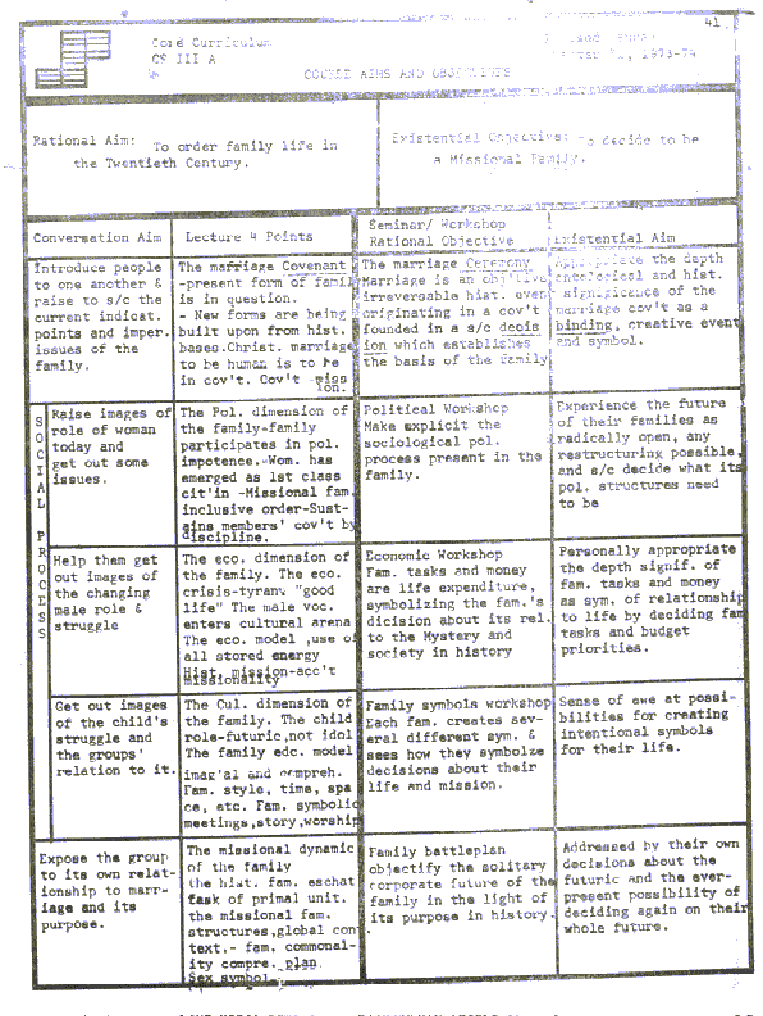 t~n~ Cl~r'i ~, ~ ' ~.~
CSIII A
MEAL CONSTRUCT
44
Revised Manual
Quarter II, 197374
Saturday Noon Meal Economic Male
Su.~.~er '73 Soncs
t~nntGnt
Meal
Introduction
Ritual
Contingency feast on lives of others
In The Beginning
Prayer
Family
Conversation
Questions:
1. Images of a real Man?
2. Image of man in grandfather's day.
3. Women only: Image of man today?
4. Men only: New image of man today?
5. Where is struggle with maleness today?
6. How would you compare this conversation with conversation this morninz on woman?

~r= a~ 1 _ ~u
Core Curriculum Revised Ma~ual
CSIII A MEAL CONSTRUCT Quarter II, 197374
~ ~'' ~
Saturday Evening Meal Cultural Child
L .
Title Content
Songs
Meal
Introduction
Ritual
Historical Church Songs
Meal as secondary symbol feast then engage in work.
grace and Peace
Prayer
Individual
__-
Conversation
Questions:
1. What do childre need today?
2. How is this list different from 50 years ago?
3. What is problem from the child's point of view? ( What would he say?)
4. How does the child affect the family?
5. How does the family affect the world through the child?
6. What's been revealed to us about ourselves in this conversation?

Core Curriculum
CSIII A
MEAL CONSTRUCT
Sundav Moim~r!~ Veal Mission
Revised Manual 46 Quarter II, 197374
Title Content
Songs Other World Songs
_ _~
Meal
Introduction Humility
Gratitude
Compassion
Ritual Praise the Lord
.
Prayer Movement
Conversation
Questions:
1. Questions to couple: a) What does it mean to love? b) What does it mean to honor? c) What does it mean to obey?
2. To women: How do you start fights?
3. To man: How do you remain one who wears padis in family?
4. To all: What advice would you give?
( Note: Maffieds know struggle, singles have distance.)
Claim Promises for couple.
6:30
Daily
Office
10:00 pr Genova Offic.
::.~O
Seturda
Pcrveraione All eelf consc`0~5 h `=cni`~i_~~r~r`: The clessica1 f~t
.: c dcae in thh
worship .oday t~nda to be , ~ ~ .:, .: acae ~n ~R. indiviouali£t~c, intellictuBi ~ `~h''63~g ~h~c~. iB a dialogue
tic. ~nd cmotioncli£tic.
Cultic Act Corporate h'orship is &n cnactmEnt do~e by the total m&n and thc total body.
Structura: Tho three acts of worahlp are the three acts of life: confceaion, acknowledging who you are; praLsc, embracing t the fullnoss of life; and dedication, expanding oneself for other people.
Friday
Dra~a Every man and every social mov't has a drama that points to its basic understandinQ of life.
bet~een ~o, the ~'orld, the peop~ le, the soci~3t and conte~proary word and the tcb lo of the Lcrd. P.erose~tat os~al All zuthantic'
worshI.n gs doDo in bohalf of alit not present, all the surrounding c=~3:_..'ty ~ all of creaticn itself.
Docision Tho opportunity of a poraocal roaponso ia never loat for any man and in worhaip each part of the offico
·nds with a docisional, "hDan."
Saturdag
Nood Norship, like life, ia is made up of three mooda: hwnility, tho stance of being hat ono is; gratitudo, the posturo that life is good us $t is; and compassion, the atyle of being whero a~o caroa for all life.

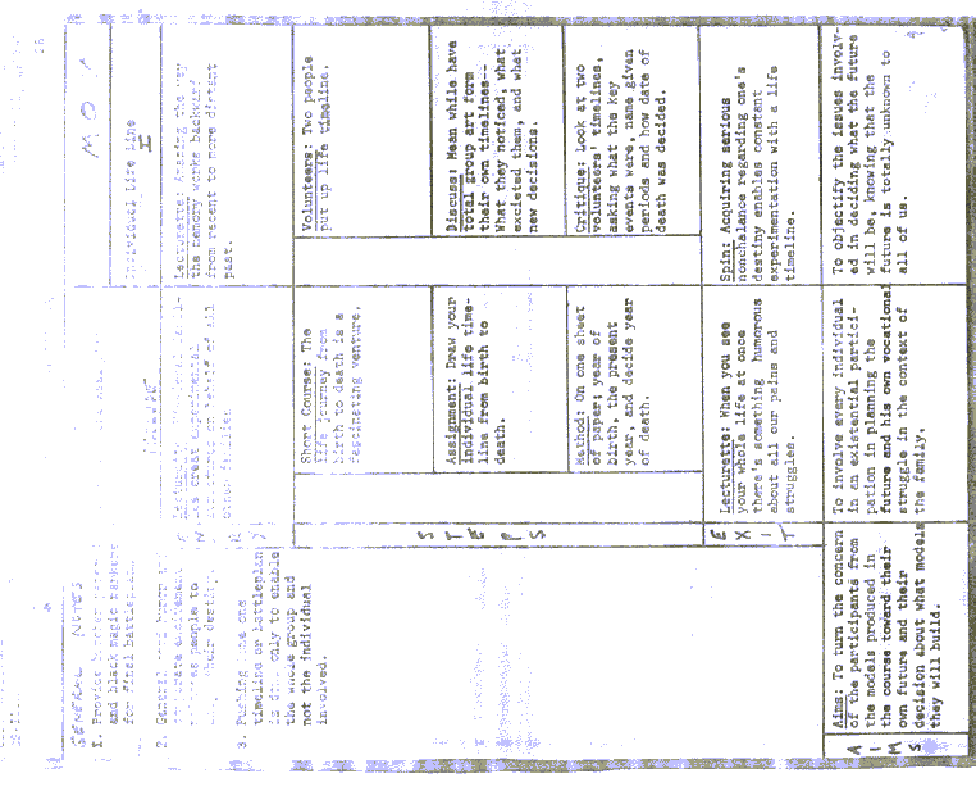 I ~ CS IIIA
INDIVI ~'c'.._
STEPS
Reflect
AND FAMILY
Session: 4
r~ RK S ^C r : r ,'. ,~ ~ ~\' SNMBOLS
M ~ V r M E N T I I I: (C o n t i
P~nrFnuRrs
RESEARCH CEI;TRI.'L5: CHIC, t~n ODhRTER II, 19731974
d )
Reflect briefly on what this exercise has revealed.
5 minutes
l
Snin
C C N C L U S I O N
A family is known by the symbols it creates. It carries on its heritane through this identity.

CS IIIA Session: 4 ~ESELRCH CENTRUM: CHICAGO
INDIVIDUAL b'ORKSHOP: FAMILY SYMBOLS QUARTER II, 19731974
AND EAMILY 34
I N T R O D U C T I O N (c o n t i n u e d)
STEPS PROCEDURES
.. .
Spin Spin: The missional thrust of any family is disclosed
by the actual symbols they discover, maintain, and
create.
M O V E M E N T I: A S S I G N M E N T S
10 minutes
_
Contexting
A~R TGN~.NTR
Give the following assignments. (List them on board.)
1. Craeto a~ lae.3ttoaal family coateofarms which tells your family story.
(Short course: A family coatofarms views the family's story through its decision to be mission, and tells of its significant events and values. A family symbol is much less complicated, but is more authoritative, with more existential power.)
2. Design a family symbol.
3. Create an intentienal family rite.
4. Design a oneyear curriculum by quarters, showing what, when, where, how, and why.
5. Write a threesentence statement of what you intend with your decor.
(Short course: The decor in your house tells a story about who you are and what you have decided about life.)
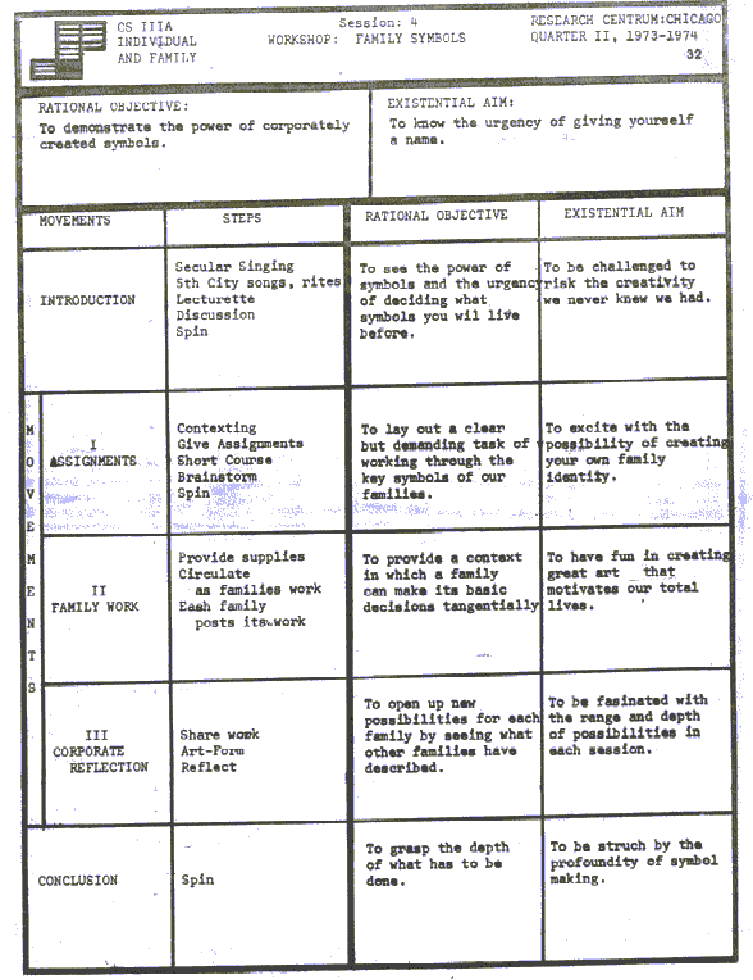


3
CS IIIA Sesslon: 3 RESEARCH <2ENTRUM: CHICAGO
INDIVIDUAL ECONOMIC WORKSHOP QUARTER ~I' 19731974
_
5 Min.
STEPS
PROCEDURES
_
WRITE ASSIGNMENTS ON BOARD
Work as individuals:
1. List 5 jobs assigned to each family member.
2. List 5 problems in the economic life of the family.
Work as family:
Fill in model budget form with %' s you are spending
monthly, your average for last year.
"How do we dare risk ourselves? To look at economic life is to expose our stance toward life...but for one person to dare to look at that is to open the possibility for all of us being able to look and choose, to take a stance of s/c intentional spending of time and money."
_
MOVEMENT I: TASK AND BUDGET MODEL
45 Min.
_
MAKE ASSIGNMENTS (INDIVIDUAL AND FAMILY)
30 Min.
Take 10 minutes to work as individuals on the two questions Take 20 minutes to work in families on the budget 96's.
PASS OUT BUDGET CHARTS
SPIN ON ASSIGNMENTS
_
MOVEMENT II: FAMILY ROLES ISSUES
1. Where did you find yourself erasing? (especially during the budget?)
2. Where
3. What holds for you your experience in doing the assignment?
_
25 Min.

LIST ON LOARD
GET JOBS LISTED ON BOARD GET SINGLE FAMILY UNITS AS WELL AS MARRIED FAMILY UNITS TO LIST THEIRS
COMPARE LISTS
RAISE QUESTIONS
25 Min.
How do you decide what jobs need to be done and who does th'

1. What do children need to learn to enable them to live independent lives?
2. What is the crucial problem you found in the economic life
of your family?

j-~:_. ~:~
~cllTR SESSION ?
INDI'~hIDU.B rOLITICAL l>OR.~iHOP
AND FAMILY
~c~;Rcu cr~'Trr,'' · CHICAGO "ARTE R II, 1°7374
2E

MOVEMENT Ill PREAMBLE
PROCEDURES

READ
PREAMBLES
5 MIN.
REFLECTION
5 MIN.
HAVE FOL~ OR FIVE PREAMBLES READ
MIX MARRIED AND SINGLE FAMILY UNITS
TO GROUP
1. t'That self understanding is implied ?
2. What is this family all about ?
TO INDIVIDUAL
1. IS that a fair restatement of who vou are
TO GROUP
TO GROUP
1. What relationship to the Church is implied?
TO INDIVIDUAL
1. What would you sav
?
?

~ POSTLUDE
CONVERSATION
SEND OUT
~ MIN.
1. As you look back on this workshop what was particularly helpful in terms of your own situation?
2. What would vou see would be the next step for your family
in this area ?

'''+'TT,~,~-~ _~ 7~
CSIIJ ~
~-~: ~.~e-:: ~.. i~,
c~sCIcNi z:
POLITICI.L WC: KC k'OP

~UAR'F,. . II,

PRELUDE LND STUDY
STEPS
LhY OUT ASSIGN }~NT
5 MIN.
PROCEDURES
. WRITE ON BLACKBOARD AND EXPLICATE WHILE WRITING
1. Wrt~e down 5 structural problems of the ccntemporarv family
2. List 10 items that need to be included in a family constitution.
3. Describe the roles each member of your family currently plays.
4. Describe the current decision making process.
5. Write the preamble to your family constitution.
Work on the first four questions individually and the fifth question as families.
PASS OUT MATERIALS
2 MIN.
LAY OUT TIME DESIGN
2 MIN.
BUTCHER PAPER
TAPE
MAGIC MARKERS
CHALK AND ERASERS
1. Structural Problems 5 min.
2. Constitutional Items 7 min.
3. Family Roles 3 min.
4. Decision MakinF Process 3 min.
5. Preamble 25 min.
~TUDY TIME
50 MIN.

REELECTIVE CON YE RSA TI ON 5 MIN.
WALK AROUND ROOM TO MAKE SURE PEOPLE ARE FREE TG WORK LAY OUT SAMPLE ROLE CHART IwA: M`H 166° |sus16 |
BE TIME KEEPER
_
What was the hardest part of the workshop?
What was the most fun or enjoyable'
Where are your questions now, where are you least clear?
